


When planning event signage, one of the most common questions businesses ask is: what is the difference between PVC and vinyl banners? For trade shows, retail promotions, exhibitions, and outdoor campaigns, selecting the right material directly impacts durability, print clarity, and overall brand presentation.
Understanding material specifications is not just a technical detail. It influences how your advertising banner performs under lights, wind, moisture, and repeated installations. For exhibitors and marketers who rely on professional displays, clarity on PVC and vinyl banner printing helps ensure smart, cost-effective decisions.
This guide breaks down the facts, compares real-world applications, and helps you determine what is better for your specific promotional goals.
Popular Products



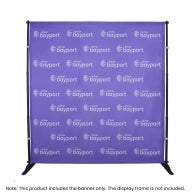


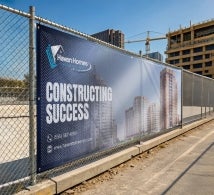
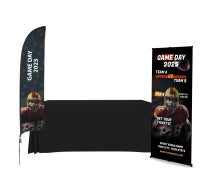

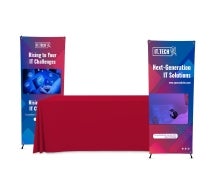
What is the Difference Between PVC and Vinyl Banners?
Understanding Banner Materials
In most commercial signage contexts, vinyl is actually a type of PVC material. PVC stands for polyvinyl chloride, which is a synthetic plastic polymer widely used in flexible signage substrates. Many suppliers use the terms interchangeably, which often causes confusion during a PVC banner vs. vinyl banner comparison.
Technically speaking, most standard banners are made from flexible PVC sheets reinforced with polyester scrim for strength. However, differences arise in thickness, coating, finish, and manufacturing process. These variations influence performance in indoor versus outdoor environments.
For businesses ordering a custom banner, understanding these distinctions ensures the final product matches the display conditions and expected lifespan.
What is a PVC Banner?

A PVC banner is typically a heavy-duty signage material made from polyvinyl chloride with a woven fabric layer embedded between PVC coatings. This construction improves tensile strength and tear resistance.
Common PVC banner uses include:
- Outdoor building wraps
- Construction site signage
- Large-format event backdrops
- Long-term storefront displays
Because of its structural reinforcement, a PVC banner performs exceptionally well in outdoor environments. It resists moisture, UV exposure, and moderate wind conditions when properly installed.
For trade show organizers and outdoor exhibitors, this durability makes PVC vs. vinyl banners for advertising a key decision point when weather exposure is expected.
What is a Vinyl Banner?

In the signage industry, vinyl banner printing usually refers to printing on flexible PVC sheets designed specifically for promotional applications. These banners are widely used due to their affordability, print quality, and versatility.
Vinyl banners are available in multiple weights, commonly measured in ounces per square yard. Lighter-weight options are suitable for indoor events, while heavier variants offer improved durability outdoors.
For short-term campaigns or recurring event setups, a vinyl banner provides an effective balance of cost and performance.
PVC Banner vs. Vinyl Banner Comparison
A clear PVC banner vs. vinyl banner comparison helps marketers evaluate material suitability based on application rather than terminology alone.
1. Durability: PVC banners with reinforced scrim are engineered for long-term outdoor exposure. Standard vinyl banners also offer durability, but lighter variants may not withstand prolonged harsh weather.
2. Thickness and Weight: PVC banners are generally heavier due to added reinforcement layers. Vinyl banners can be lighter, making them easier to transport and install for temporary promotions.
3. Print Surface Quality: Both materials support high-resolution graphics. However, premium vinyl banner printing often includes specialized coatings that enhance color vibrancy under exhibition lighting.
4. Flexibility: Vinyl banners are highly flexible and easier to roll, which is useful for businesses that frequently travel to trade shows.
Read More: Difference Between Feather Flags vs Teardrop Flags
Indoor vs. Outdoor Applications
Material choice often depends on where the banner will be displayed.
For indoor trade shows, conferences, and retail promotions, lightweight vinyl is usually sufficient. Exhibition halls provide climate-controlled environments, reducing material stress. In these cases, vinyl banner printing offers vibrant graphics and easy portability.
For outdoor environments such as street promotions, sports events, or construction perimeters, reinforced PVC materials provide enhanced stability. This makes a PVC banner particularly suitable for wind-prone areas.
When comparing mesh banner vs. vinyl banner for windy locations, mesh variants allow airflow through perforations, reducing wind load. Solid PVC or vinyl banners may require stronger mounting hardware in such scenarios.
Print Technology Compatibility
Both PVC and vinyl materials are compatible with large-format digital printing technologies, including solvent, eco-solvent, UV, and latex printing systems.
High-quality vinyl banner printing ensures sharp text, consistent colour gradients, and resistance to fading when paired with UV-resistant inks. PVC banners used for extended outdoor display typically incorporate UV-stable coatings to protect graphics over time.
For event marketers, print clarity is critical. A promotional banner with pixelated graphics can undermine brand perception. Therefore, material choice should complement both printing method and viewing distance.
Lifespan and Maintenance
Lifespan varies depending on exposure conditions and installation quality. Indoor vinyl banners can last several years when properly stored between events. Outdoor PVC banners may last one to three years depending on climate severity.
Cleaning typically involves mild soap and water. Harsh chemical cleaners should be avoided as they may degrade the printed surface. Proper rolling instead of folding helps prevent creases, particularly for reusable trade show displays.
Businesses investing in a reusable advertising banner should factor in storage practices to maximize longevity.
Choosing the Right Material for Your Campaign
Selecting between materials should align with campaign duration, environment, and branding goals.
If your display requires frequent travel and setup, lightweight vinyl options are practical. For long-term exterior installations, reinforced PVC offers superior structural integrity.
When evaluating PVC vs. vinyl banner printing, consider the following factors:
- Display duration
- Weather exposure
- Mounting method
- Transport frequency
- Budget constraints
For exhibitors who regularly update graphics, a custom banner solution tailored to event schedules ensures maximum flexibility.
Design Considerations for Maximum Impact
Material choice is only one part of the equation. Effective design determines whether your banner captures attention in crowded venues.
Understanding how to design custom banner layouts improves visibility and message retention. Key design best practices include:
- Using high-contrast color combinations
- Keeping headlines large and legible from a distance
- Limiting text to essential messaging
- Incorporating brand logos prominently
- Allowing sufficient margin space around edges
A well-designed promotional banner complements the material’s physical strengths and enhances overall campaign effectiveness.
Read More: Adhesive Decals vs Non-Adhesive Decals: Key Differences and Uses
Final Thoughts
In most practical scenarios, the confusion surrounding PVC vs. vinyl banner printing stems from terminology rather than major structural differences. Since vinyl banners are typically made from PVC, the distinction often relates to thickness, reinforcement, and intended application.
For indoor exhibitions and portable event signage, vinyl banners offer flexibility, vibrant print quality, and affordability. For long-term outdoor installations, reinforced PVC materials provide added durability and weather resistance.
When asking what is better: PVC or vinyl banner, the answer lies in campaign context, environment, and expected lifespan.
For businesses, exhibitors, and marketers seeking professional results, choosing the right custom banner material ensures your message stands strong – whether under trade show lighting or outdoor exposure.
By understanding the facts behind PVC banner uses and performance characteristics, brands can confidently invest in signage that supports visibility, durability, and measurable promotional impact.