


If you’re planning to invest in a neon sign, one question will almost certainly come up: LED or Traditional Glass? Both create eye-catching displays. But they get there in very different ways, and that difference shows in cost, upkeep, and how long the sign actually lasts.
What worked for a shopfront twenty years ago doesn’t always make sense now. People shopping for signage today want something reliable that won’t need constant babysitting. That’s really why comparisons around LED neon signs vs traditional neon keep popping up.
So, whether you’re working on a storefront, dressing up a café, adding some personality to a room at home, or setting up for an event, it helps to know where each option actually stands before you commit. A decorative neon sign can transform a home or event space, while a business neon sign can make your brand more memorable. The right choice depends on the purpose of your display.
Popular Products











Understanding the Difference Between LED Neon and Glass Neon
Start with how each sign is actually built, and the rest starts to make sense.
Traditional neon signs are handcrafted from glass tubes, bent by hand into shape. Fill those tubes with a gas like neon or argon, run electricity through them, and you get the glow people have recognised for decades.
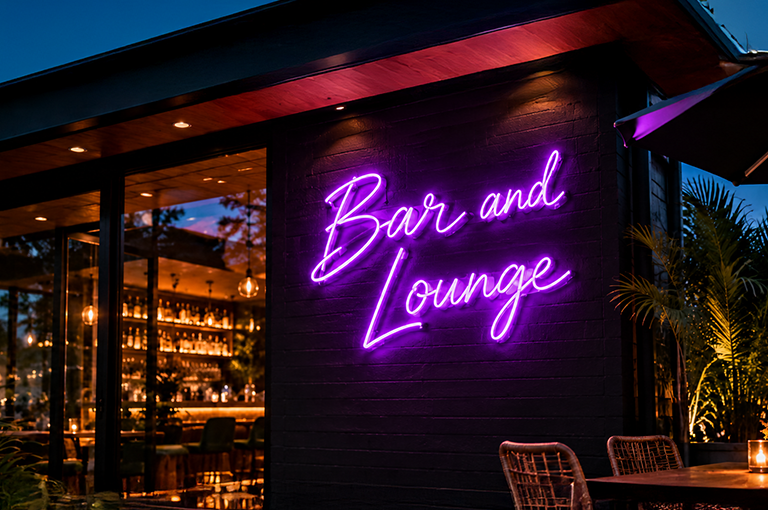
LED neon works differently. Instead of gas, you’ve got flexible silicone or PVC tubing wrapped around LED strips. Less electricity, similar glow. Stand a few feet back and most people genuinely can’t tell which is which.
Here’s a table for clarity:
| Feature | LED Neon | Traditional Glass Neon |
| 1. Construction | Flexible LED strips inside silicone or PVC tubing | Hand-bent glass tubes filled with gas |
| 2. Energy Use | Lower power consumption | Higher power consumption |
| 3. Durability | Flexible and more resistant to bumps | Fragile and prone to cracking |
| 4. Lifespan | Typically 30,000–50,000 hours | Can last for years with proper care |
| 5. Maintenance | Generally low maintenance | Requires specialist repairs when damaged |
| 6. Safety | Low-voltage and stays relatively cool | Uses high voltage and glass tubing |
| 7. Design Flexibility | Easy to shape into detailed designs | More difficult and labour-intensive to shape |
| 8. Outdoor Use | Available in outdoor-rated options | Requires suitable protection and installation |
| 9. Best For | Businesses, homes, events and flexible branding | Vintage, classic and handcrafted aesthetics |
Read Also: Everything You Need to Know About Neon Signs
Which One Looks Better?
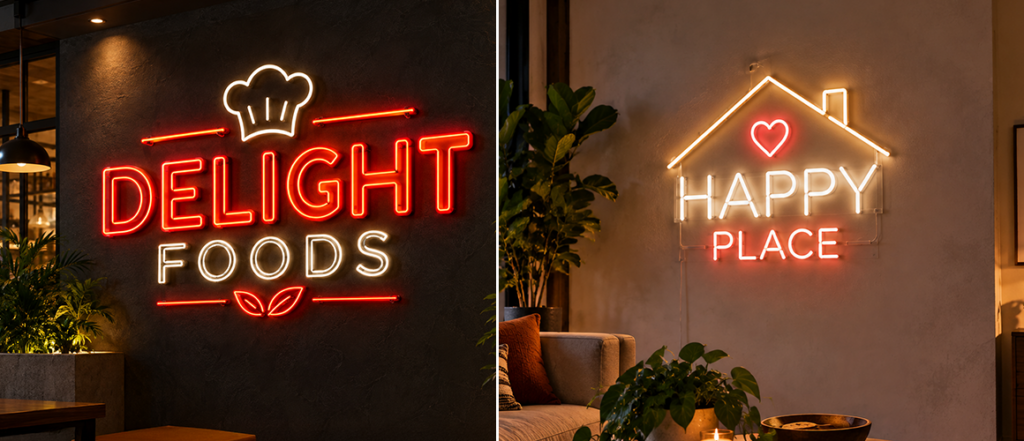
Honestly, there’s no clean winner here.
Glass neon has a warmth to it that’s tough to fake. There’s a reason vintage restaurants, old theatres, and historic storefronts still lean on it. It just feels right in those spaces.
LED tends to look crisper and more even. It also comes in far more colours and brightness options, which is part of why brands gravitate toward it. Got specific brand colours or fine detail in your artwork? A logo neon sign built with LED will usually nail that far more precisely.
Energy Consumption and Running Costs
Leave a sign running for eight, ten, twelve hours a day, and it starts showing up on the electric bill.
Glass neon needs high-voltage transformers to keep that gas glowing, and that adds up. LED uses a fraction of the power for a similar look. Multiply that gap across a few years, and for restaurants, retail stores, or offices running signage all day, it’s not a small number anymore.
If you’re managing signage across more than one location, that lower draw matters even more.
Which Neon Sign Lasts Longer LED or Glass?
This is probably the question buyers ask most: which neon sign lasts longer, LED or glass?
For day-to-day commercial use, LED tends to hold up better.
Glass is glass. It cracks in transit, it cracks during install, it cracks if someone bumps into it wrong. And once it’s cracked, you usually need someone with a real specialist to know-how to fix it.
LED tubing bends and flexes without much drama. A lot of decent LED signs are rated somewhere between 30,000 and 50,000 hours, which in practice means years of running with barely a second thought.
Safety Makes a Bigger Difference Than Many People Realise
Nobody thinks about safety first when picking a sign. Then it’s installed, and suddenly it matters.
Traditional neon runs on high voltage through glass that can break. Installed properly, it’s fine. But damage turns into a real repair problem fast.
LED stays cool to the touch and skips the glass altogether, so there’s just less that can go wrong physically. That’s a big part of why it works well in busy commercial spaces, homes with kids, schools, hospitality venues, anywhere accidental contact is likely.
Can LED Neon Signs Be Used Outdoors?
Absolutely, as long as you pick a model that’s actually rated for outdoor use.
Outdoor-rated LED signs handle rain, dust, and swinging temperatures without much fuss. That’s why you’ll spot them outside retail stores, restaurants, and cafés holding up fine season after season.
One thing worth double-checking before installing: the IP rating. Don’t skip that step.
Which is a Better Choice for Everyday Branding?
Brands change things up more often than they used to. New promotions, new interiors, new messaging, and the signage needs to keep pace.
A custom neon sign lets you build names, slogans, or full graphics in pretty much any shape you want. LED tubing bends more easily than glass ever will, so getting detailed designs made tends to be quicker and cheaper too.
If your brand refreshes its look regularly, that flexibility isn’t nice-to-have. It’s the whole point.
Which is Easier to Maintain LED or Glass Neon Sign?
Nothing is fully maintenance-free. Some things just need a lot less of it.
With glass neon, a broken tube or a worn-out transformer means a repair job and finding someone who actually knows how to fix a handcrafted neon can take a while.
LED is simpler. Dust it now and then, install it right the first time, and you’re mostly done. Fewer parts mean fewer things breaking down the line.
That’s a big reason LED keeps showing up on lists of dependable business signage solutions.
Different Spaces Have Different Needs
Not every sign is doing the same job.
A business neon sign usually stays all day, every working day, which puts reliability and running costs front and center.
At home, the priorities shift. A home neon sign is more about adding some personality to a bedroom or a game room, without cranking up your power bill or heating the room up.
And then there’s temporary use. Getting hauled from venue to venue is rough on anything fragile, so an event neon sign really benefits from being light and easy to move, something glass just isn’t built for.
Are LED Neon Signs Better Than Glass Neon Signs?
For most buyers today, yes.
LED costs less to run, lasts longer, needs less upkeep, and installs more easily. It also shrugs off accidental bumps better and gives you way more room to design around.
Glass still earns its place, though. If handcrafted authenticity is what you’re after, nothing quite replaces real glass neon. Some businesses pick it on purpose, because that classic feel is part of their brand’s story.
Read More: How to Install a Neon Signs on a Wall
Why Choose LED Neon Instead of Glass Neon?
Still stuck on deciding between LED neon signs vs glass neon? Think about how the sign needs to perform over the next few years, not just how it looks on day one.
Want something dependable, cheap to run, low-maintenance, and flexible enough to build almost any design? LED checks those boxes. You still get that bright, attention-grabbing look, just with a lot less hassle behind it.
Glass neon hasn’t lost its charm. But for most businesses and homeowners, LED just makes more sense day to day.
Conclusion
Picking between LED and traditional glass neon isn’t really about which one looks brighter in a showroom. It’s about which one fits your space, your budget, and what you’ll actually need from it years down the line.
Glass neon will always have an audience, people who want that classic, handcrafted look and don’t mind the tradeoffs. LED has become the default for everyone else, thanks to lower running costs, better durability, and a lot less maintenance.
Before you decide, think through where it’s going, how much it’ll run, and what actually matters to you over time. Look past the price tag on day one. The sign that holds up years later is the one worth paying for.