


For a local business, getting customers through the door often starts before they reach your entrance. An effective A-frame sign can catch the attention of pedestrians, communicate an offer in seconds and give people a reason to step inside. This makes it a practical option for cafés, restaurants, retail stores, salons, boutiques and other businesses that depend on local foot traffic.
The key is knowing how to attract customers with A-frame board signs through strategic placement, clear messaging, and the right sign construction. Unlike digital ads that require someone to click or search for your business, a pavement sign reaches people who are already near your storefront and can act immediately.
Popular Products


What Makes A-Frame Signs Effective for Local Businesses?
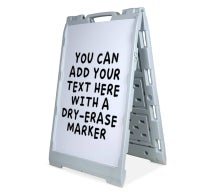
An A-frame sign sits at street level, usually outside or near the entrance of a business. Its two-sided design allows your message to face pedestrians approaching from different directions.
This simple format offers several advantages:
- High local visibility: Your message reaches people already passing your business.
- Flexible messaging: Change promotions, menus, prices, or announcements as needed.
- Easy positioning: Move the sign based on pedestrian flow and storefront layout.
- Two-sided exposure: Display different messages or repeat the same offer on both sides.
- Direct call to action: Give nearby customers an immediate reason to enter.
- Reusable format: Update the graphics or inserts instead of replacing the entire display.
These benefits of A-frame signs for businesses make them particularly useful when the goal is to influence customers close to the point of purchase.
Read Also: How to Choose the Right A-Frame Sign for Your Business
Attracting Customers with A-Frame Sign

The biggest advantage of an A-board sign is its proximity. Understanding how do A-frame signs attract customers starts with recognising how effectively they place your message directly within the customer’s physical journey.
Imagine someone walking down a high street without planning to visit your café. They notice a board announcing, “Freshly Baked Croissants £2.50 Until 11 AM.” The message is short, relevant, and available immediately. Instead of simply walking past, they now have a reason to stop. A well-designed board can work by:
- Interrupting visual patterns: A sign positioned across the pedestrian’s line of sight can attract attention.
- Communicating quickly: A concise headline lets people understand the offer without stopping for a long read.
- Creating urgency: Limited-time offers encourage immediate decisions.
- Reducing the distance to purchase: The customer is already close to your entrance.
- Making the next action obvious: A simple “Walk In,” “Order Here,” or “Today’s Special” can remove hesitation.
Research published in the Journal of Retailing and Consumer Services found that variations in local food signage influenced consumer perceptions and responses in a casual dining setting, demonstrating how physical signage can affect the customer experience.
Better Footfall with Better Sandwich Board Signage
Getting more people through the door is not simply about putting a board outside. The placement and message need to match how people actually move around your location.
Start by observing your busiest pedestrian periods. A coffee shop might receive its highest traffic before work, while a boutique could see more visitors during weekend afternoons.
Then position your sign where it can be noticed without creating an obstruction.
Consider:
- Where pedestrians naturally slow down
- Which direction most people approach from
- Whether parked vehicles or street furniture block visibility
- How far people are from your entrance when they see the sign
- Whether the board remains visible during different times of day
- Whether your message is relevant to the people passing by
For example, a bakery could place a board near the main pedestrian approach with a message promoting fresh bread available that morning. A clothing store could use the same format to promote a weekend sale.
The strategy is simple: put the right message where the right people can see it at the right time.
What Should You Put on an A-Frame Sign?

Your sign has only a few seconds to communicate its message, so avoid treating it like a miniature brochure.
A strong design should usually include:
- One primary message
- Large, readable headline
- High contrast between text and background
- A clear offer or benefit
- Simple supporting information
- A direct call to action
Instead of:
“We offer a wide selection of freshly prepared breakfast foods, sandwiches, pastries, hot drinks and cold beverages.”
Try:
BREAKFAST FROM £5
Fresh. Fast. Ready Now.
Walk In →
The second version is easier to process while walking.
Humour can also work when it fits your brand. A café might use “Your Monday Needs Coffee” while a shoe shop could promote “Walk This Way → Sale Inside.”
The goal is not to say everything. The goal is to make someone want to know more.
Which A-Frame Sign Material Is Right for Your Business?
The right construction depends on where you plan to use the sign, how often you move it, and the conditions it needs to withstand.
| Sign Type | Best For | Key Advantage | Considerations |
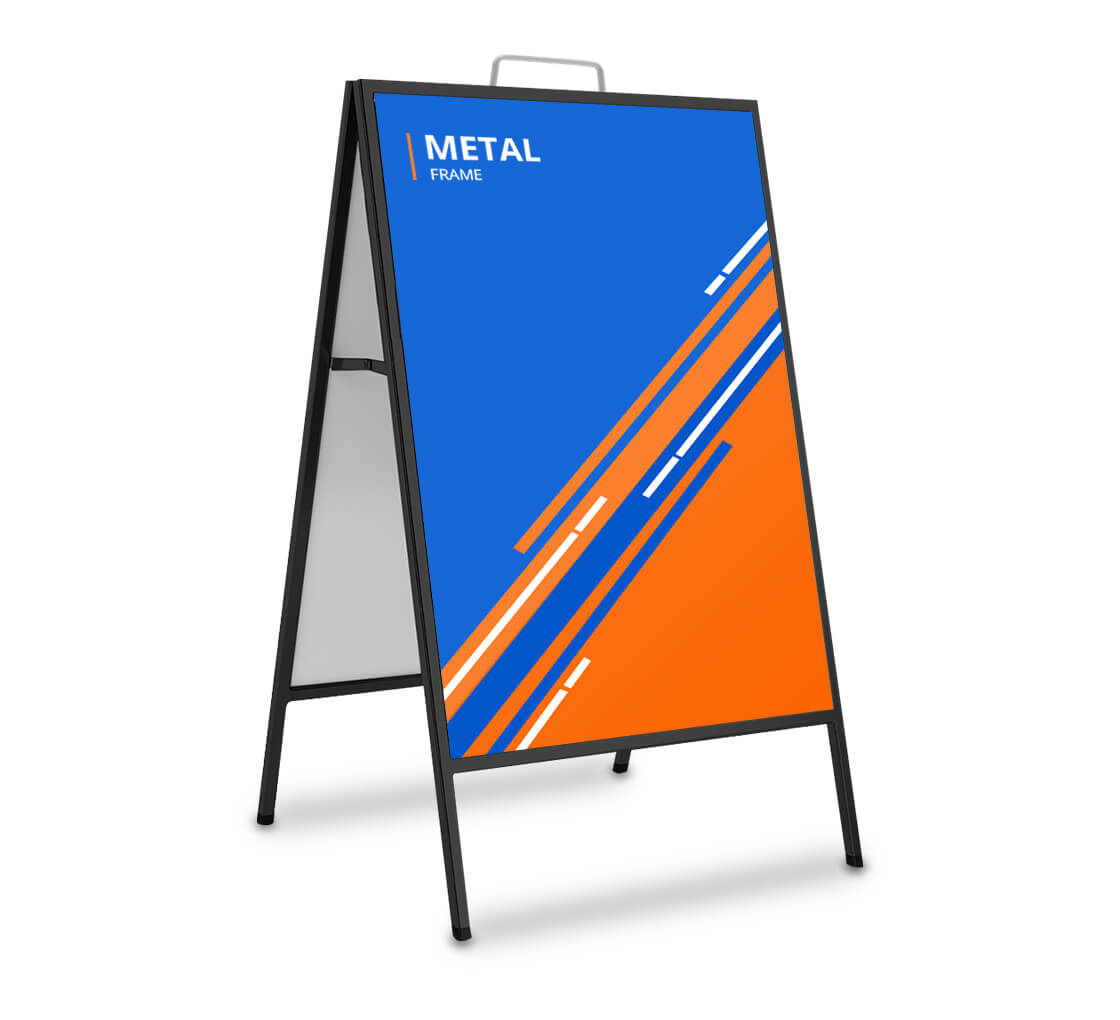
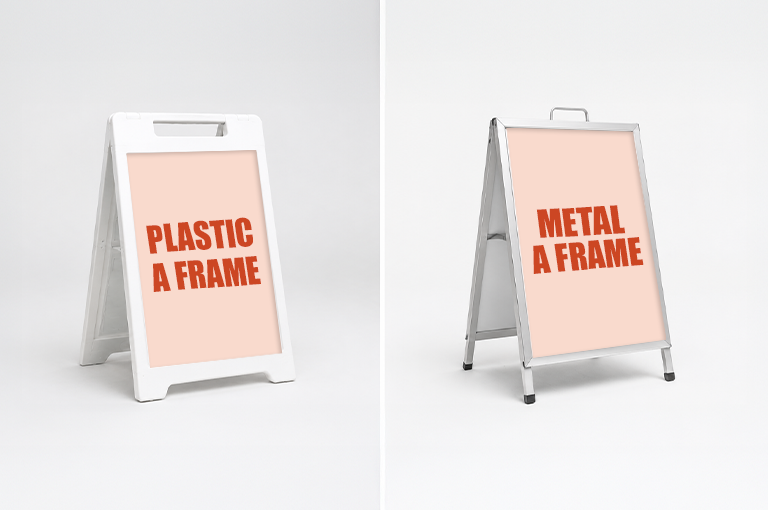
| Metal A-frame board sign | Permanent or frequent outdoor use | Strong, durable construction | Generally heavier to move |
| Plastic A-board sign | Shops that move signs regularly | Lightweight and portable | May require additional stability in windy conditions |
| Water base pavement sign | Outdoor locations exposed to wind | Weighted base improves stability | Base needs to be filled and emptied when required |
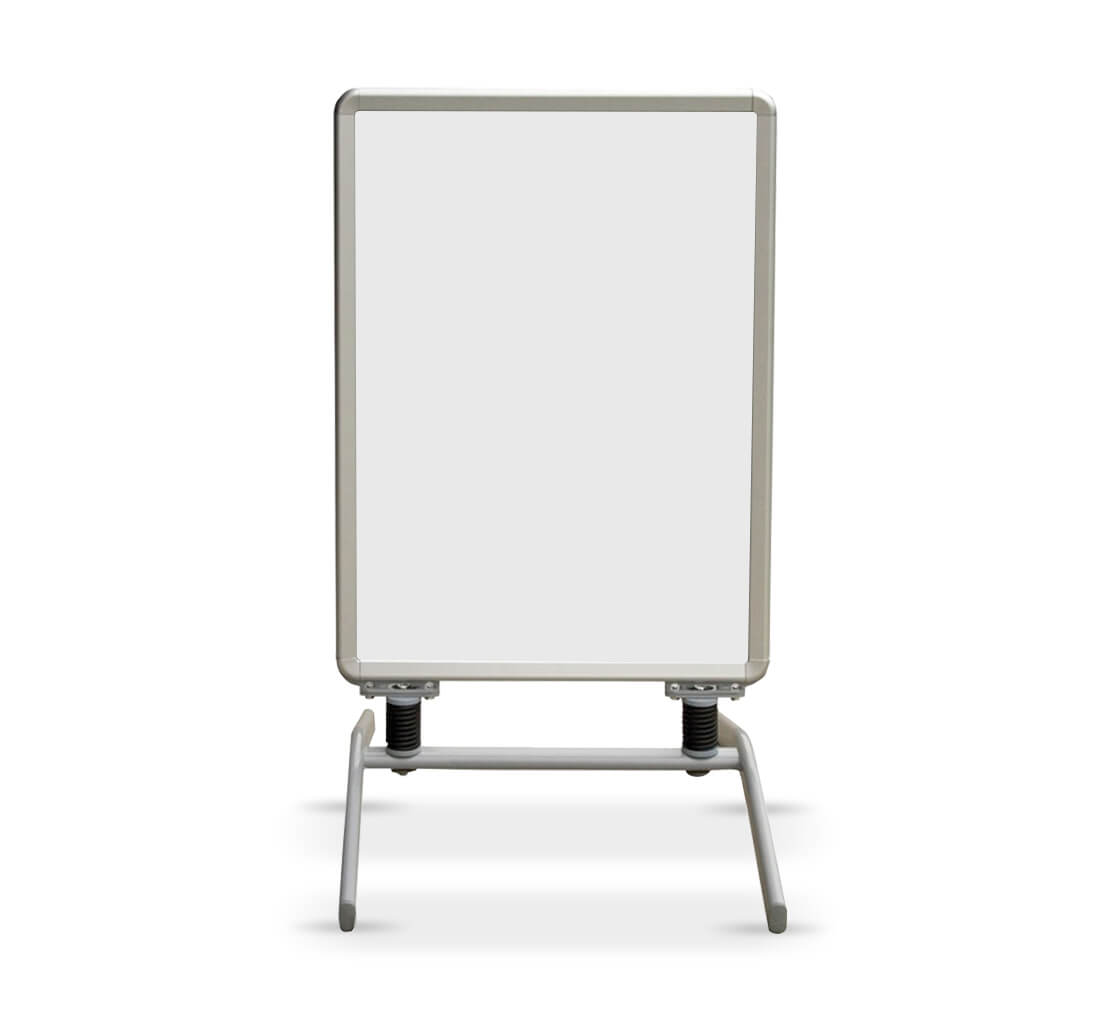
| Wind resistant pavement sign | Exposed or windy locations | Designed to flex in stronger wind | Usually more specialised than standard boards |
| Portable pavement sign | Businesses that reposition displays | Easy to move throughout the day | Placement still needs to follow local rules |
Read More: Difference Between A-Frame Signs vs. Pavement Signs vs. Sandwich Boards
What Are the Benefits of A-Frame Signs for Local Marketing?
A-frames can complement digital campaigns rather than compete with them.
Digital advertising helps businesses reach people online, while physical signage reaches people already near the business. Using both channels can create multiple opportunities for discovery.
For local business marketing, an A-frame sign can help:
- Increase visibility around your storefront
- Promote time-sensitive offers
- Communicate daily specials
- Guide customers toward your entrance
- Reinforce brand personality
- Support seasonal campaigns
- Test different promotional messages
- Reach pedestrians without recurring digital ad spend
The format is especially useful for businesses whose customers make quick, location-based purchasing decisions.
Final Thoughts
An A-frame sign gives local businesses a direct way to communicate with people who are already nearby. When the message is short, relevant, easy to read and paired with strategic placement, it can help turn passing attention into store visits.
The most effective approach is to treat your pavement display as an active part of your local marketing strategy rather than simply another piece of signage. Choose the right construction for your environment, create messages that give pedestrians a reason to act, follow local placement requirements, and keep testing what works.
Frequently Asked Questions
Q1. Do A-frame signs actually increase foot traffic?
Ans. A-frame signs can help increase foot traffic by making a business more visible to pedestrians and communicating a timely reason to enter. Their effectiveness depends on factors such as placement, message, design, location, and the relevance of the offer.
Q2. How far away should an A-frame sign be readable?
Ans. The exact viewing distance depends on the sign’s dimensions, typography, contrast, and surroundings. As a practical rule, the main message should be large and simple enough to understand quickly from several metres away.
Q3. Are A-frame signs allowed on UK pavements?
Ans. Rules vary between councils and locations. Some areas require permits or written permission, while others have specific placement and accessibility requirements. Businesses should check with their local authority before placing an advertising board on public pavement.
Q4. Which A-frame sign is best for windy areas?
Ans. A weighted water-base design or a purpose-built wind-resistant model can be more suitable for exposed locations. The best choice depends on the local weather conditions and the manufacturer’s recommended usage.
Q5. Can I change the message on an A-frame sign?
Ans. Yes. Many A-frame displays are designed to accommodate interchangeable graphics, inserts, or panels. This allows businesses to update promotions, seasonal messaging, menus, and announcements without replacing the entire display.