


If you run a local coffee shop, a boutique clothing shop, or a busy high-street dental clinic, you know how hard it can be to get people through your front door. The digital world is full of ads, but nothing beats catching someone’s eye when they are walking past your shop.
When you start looking at ways to market your shop, you will come across a few common terms: A-frame signs, pavement signs and sandwich boards. They may seem like they all do the same thing. They sit outside your shop, show daily offers and try to attract the attention of passers-by. But they’re not identical.
Wondering if A-frame signs and pavement signs are the same? The short answer is no. They serve similar purposes but can differ widely in design, durability and uses. Let’s review the main differences so you can select the right sign for your shop.
Popular Products


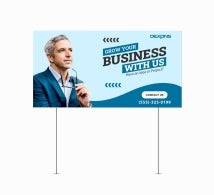
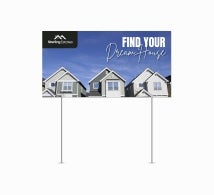
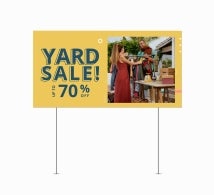

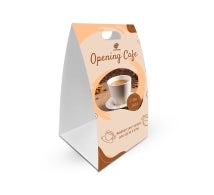
What is a A-Frame Sign?

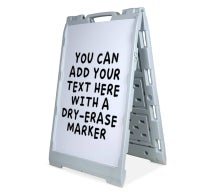
A-Frame signs are an easy and effective way to get your message in front of people. They are frequently set up outside shops, cafes, restaurants, and other businesses to attract attention and pass on useful information.
- Freestanding Signs: A-frame signs are freestanding signs that can be placed in front of shops to show offers, messages, directions or other information.
- A-Shaped Design: They derive their name from the shape. When opened, the side profile looks like the capital letter “A”.
- Two Panels: They have two main panels joined at the top by a hinge. A chain or support bar holds the sign steady.
- Easy to Move: You can put the sign outside during business hours and bring it inside when you close.
- Folds Flat: A-frame signs fold flat for easy carrying and storage in small spaces when not in use.
- Material Variety: A-frame signs can be made from materials such as aluminium, powder-coated steel, and plastic.
- Metal Choices: Metal A-frame signs are durable aluminium, powder-coated steel and perfect for high-traffic areas where the sign will be seen a lot.
- Plastic Choices: Plastic A-frame signs are lightweight and easy to move. They won’t rust or corrode.
- Built-in Handles: Some modern A-frame signs have handles built into them that make it easier to pick up and move.
- Easy Choice: Select an A-frame sign depending on where you will be using it, how often you will move it, and how much storage space you have.
What is a Pavement Sign?

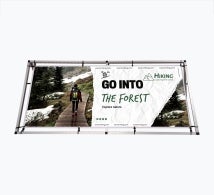
Pavement signs are outdoor signs which are placed on pavements or walkways to attract the attention of passers-by. They come in a range of designs, sizes, and base types.
- Broad Term: Many kinds of outdoor signs are generally named “pavement signs”. An A-frame sign can also be a pavement sign.
- Upright Design: Many pavement signs, unlike A-frame signs, have a separate base and an upright display panel.
- Heavy Base: These signs usually have a heavy base to keep the sign in place.
- Water Base: A popular type of water-based pavement sign. It has a hollow plastic base that can be filled with water or sand.
- Added weight: Fill the base with water or sand to weigh it down. This will make the sign more stable and less likely to blow over in windy weather.
- Spring Support: Some pavement signs have heavy springs between the sign frame and base. These let the sign play a little when the wind blows.
- Wind resistance: Thanks to the spring system, the sign will move in strong winds rather than become a sail and fall over.
- Easy to Handle: If you want to move the sign, just drain the water or sand from the base to lighten it up.
Read Also: Tips and Ideas to Attract More Walk-ins with Pavement Signs
What is a Sandwich Board?

Sandwich boards are free-standing signs which display messages, adverts, offers or directions. The term today is often used for the same type of fold-out sign as an A-frame sign.
- Old School Name: The name “sandwich board” comes from an old school style of advertising where a person would wear two boards attached, one on the front and one on the back.
- Human Sandwich: The boards made the person look like the filling inside of a sandwich, hence the fun name. Same As A-Frame Today, the terms “sandwich board” and “A-frame sign” are often used interchangeably to describe the same type of double-sided, fold-out sign.
- Double-Sided Display: Most sandwich boards have two panels, so you can put a message on either side for people walking both ways.
- Easy to Fold: The boards fold inwards to make it easy to move and store when not in use.
- Lightweight Materials: Today’s sandwich boards may be constructed from lightweight materials such as corrugated plastic or Coroplast.
- Easy to Move: Because they are lightweight, they are good for businesses that need to move their signs around to different locations during the day.
- Flexible Marketing: You can use them to promote offers and direct customers outside your shop, near an entrance or elsewhere.
Comparison Table of A-Frame Signs, Pavement Signs & Sandwich Boards
To make it easy to picture, let’s see how these options stack up against each other in key areas:
| Feature | A-Frame Signs | Pavement Signs (Base-Style) | Sandwich Boards |
| Shape & Form | Hinged triangle shape (“A” profile). | Vertical panel on a heavy, solid base. | Foldable, usually lightweight triangle. |
| Wind Resistance | Moderate (relies on weight/sand ballasting). | Extremely High (heavy water base & springs). | Moderate to Low (very lightweight). |
| Best For | Daily menus, quick promotions, and directional help. | High-wind areas, permanent outdoor placement. | Budget-friendly seasonal sales, indoor malls. |
| Portability | Very high (folds flat, features top handles). | Moderate (heavy base, often requires built-in wheels). | Highest (lightest materials to carry around). |
What are the Main Product Features?
If you’re purchasing a street-level sign, you want it to stand up to the elements and everyday use. Looking at high-quality signs, like those provided by BannerBuzz, can help you understand what to look for when you are choosing a sign.
- Weather-Resistant Prints: Good outdoor signs need good printing methods. Use UV printing or eco-solvent printing. These help to keep the graphics clear and bright when under the sunlight and rain.
- Easy To Change: Some have hook-and-loop, snap frames, or quick-load slots. These features make it easy to change the printed message without replacing the entire sign.
- Strong stability: Some plastic sign frames have hollow parts that can be filled with dry sand. The extra weight is to help keep the sign steady and to reduce the chance of it tipping over in normal outdoor winds.
- Built For Outdoors: A good pavement sign should be built for regular use outdoors and should be easy to move, set up and store when needed.
How to Choose the Right Sign for Your Storefront
Now that you know the key differences, it’s time to answer the big question: Which portable sign is best for your business? It is contingent upon where you will use the sign, how often you move it, your storage space, and the weather conditions in your area.
Choose A-Frame or Sandwich Board if:
A sandwich board or A-frame is a good option if you need a sign that is easy to move and store. If you put your sign out every morning and bring it inside every night, an A-frame is easy to manage for everyday use.
- Small Storage: A-frame signs fold down flat, making them easy to store in a small cupboard or behind a counter.
- Custom Branding: Get your message out on both sides with custom-printed A-frame signs. Use your own brand colours, logos and fonts to maintain a consistent look.
- Flexible Placement: Move the sign around to different locations outside your business as often as you like.
Select a Base-Style Pavement Sign if:
If your business is in a windy area, you may find that a base-style pavement sign is a better choice.
- Windy Locations: The wind can be a problem, but a heavy base filled with water can help keep the sign steady.
- Busy Areas: A stable sign can be useful for shops in busy high streets, where many people walk past it throughout the day.
- Open Locations: If your shop is located near the coast, on a busy street corner, or in an open area that experiences high winds, a weighted base can prevent your sign from blowing over.
- Safer Placement: A stable sign is less likely to tip over and become a hazard to people walking nearby. Abstract Investing in physical street advertising is still a reliable way to attract people walking by your business.
Read in Detail: How to Choose the Right Pavement Signs for Business
Final Thoughts
When looking for the best portable advertising signs for business, don’t just go with the cheapest thing you can find online. Think about your local climate, how much storage you have, and how often you plan to change your messages. Knowing the difference between A-frame signs and pavement signs allows you to pick out a sign that looks professional, lasts for years, and helps bring more customers through your front door.
Frequently Asked Questions
Q1. Are A-frame signs and pavement signs the same?
Ans. No. An A-frame is a foldable sign with two panels, while many pavement signs have an upright panel with a separate base.
Q2. Are sandwich boards the same as A-frame signs?
Ans. In most cases, yes. The terms are often used for the same type of foldable, double-sided sign.
Q3. Which sign is best for windy areas?
Ans. A base-style pavement sign with a weighted water or sand-filled base is usually a better choice for windy locations.
Q4. Are A-frame signs easy to store?
Ans. Yes. Most A-frame signs fold flat, making them easy to carry and store in small spaces.
Q5. Can I change the message on a pavement sign?
Ans. Yes. Some pavement signs have snap frames or other systems that let you change the printed message easily.